

By Ciara Shannon
The ideas behind community wealth building go back a very long time, at least to the Rochdale Pioneers in 1844, though the term itself was coined in Cleveland, Ohio, around 20 years ago. The Preston Model showed that councils can keep wealth local by changing how they spend. Energy is the obvious next frontier. Through its Local Power Plan and supply chain funding, GB Energy now lets councils change what they own and who builds it.
 What Preston council did
In 2013, the council commissioned CLES to map where the city’s big institutions spent their money, showing how little stayed in Preston. It used that evidence to persuade them to buy from local suppliers. And, looking to the Mondragón co-operatives in Spain, it funded the University of Central Lancashire (UCLan) to work out how to grow co-ops where local suppliers were missing.
The importance of anchor institutions
Preston’s own budget was small, so it brought together “anchor institutions”: Lancashire County Council, UCLan, Preston’s College, Cardinal Newman College, Community Gateway housing association and the Police and Crime Commissioner for Lancashire.
Over the five years from 2012/13, CLES found:
- Spend from procurement retained in Preston rose from 5% to 18.2%, an extra £74m
- Spend retained in Lancashire rose from 39% to 79.2%, an extra £200m
- 4,000 more Preston workers were earning the Real Living Wage by 2018
PwC and Demos’ 2018 Good Growth for Cities index also named Preston its top improving city. Where local suppliers did not exist, Preston grew them, seeding worker co-ops through the Preston Co-operative Development Network.
That instinct to build ownership where the market has gaps is exactly what GB Energy should build on. Most community energy groups are already co-operatives or community benefit societies, run on one member, one vote. Through the network and UCLan’s links with Mondragón, local people have learned to write business plans, raise start-up finance, govern by member vote and run businesses such as The Larder, a worker co-op supplying local food. A community energy group needs the same things: a share offer to raise capital, a board accountable to its members and the discipline to manage an asset for 20 years.
For me this is personal. My late uncle, William ‘Bill’ Shannon, spent his working life at the Co-operative Group, where he led its Responsible Retailing approach and helped put Fairtrade, animal welfare and product transparency on the retail agenda. He then served 11 years as a Liberal Democrat councillor in Preston, leading the city’s Liberal Democrats, and was made an Honorary Alderman in 2014. The idea that local institutions should keep wealth circulating in their communities is one he thought about long before it had a name. He also wrote Cumbria: 1,000 Years of Maps, a reminder that he cared as much about the story of a place as about its economy.
Dr Julian Manley of UCLan, founding chair of the Preston Co-operative Development Network, recalls that Bill was there at the beginning of the Preston Model, showing a keen interest in co-operatives and, as an opposition councillor, not always getting the credit he was due. Later Bill became a candid critic, arguing the model had become too bound up with party politics.
That warning was echoed by CLES and Preston City Council themselves, whose 2019 review said the Model was never the property of any one organisation and cautioned against tying it to a single political philosophy.
It is worth heeding: community energy assets last decades, so they need to belong to places, not parties. The same goes for GB Energy itself. It was created by one government and could be reshaped by the next, so its money is best used to put assets into local co-operative ownership that will outlast any change at Westminster or County Hall.
GB Energy: ownership and supply chains
GB Energy has two £1bn pots that matter here. The first is the Local Power Plan, launched in February 2026, which aims to give every UK community the chance to own an energy project by 2030. Its Capital Toolkit starts with early-stage grants, including a Partnership Fund for joint council and community projects, with construction loans and a Local Investment Fund to follow. The second is the Energy Engineered in the UK programme, which is building British supply chains, starting with a £300m fund for offshore wind and grid components.
Together they cover both halves of the Preston Model: who owns the assets and who supplies them. That may be no coincidence. The Local Power Plan describes local clean energy as an engine for community wealth building, the language Preston made famous. GB Energy is also already working through anchor institutions, having funded solar at 225 schools and colleges and 162 NHS sites in its first year.
Deepening the connection
 CLES breaks community wealth building into five pillars: how institutions buy, who owns local businesses, how land and buildings are used, where money is invested and how people are employed. Each pillar has an energy equivalent, shown below.
| Pillar | Preston Model practice | Local Power Plan lever |
| Progressive procurement | Anchors shifting spend to local suppliers | Anchors buying power from community generators through long-term PPAs |
| Plural ownership | Seeding worker co-ops to fill supply gaps | Community energy groups owning assets outright or through shared ownership |
| Land and property | Using public assets for local benefit | Council, college and NHS roofs and land hosting community-owned solar |
| Making finance work locally | Lancashire’s pension fund earmarking £200m for local investment | Capital Toolkit grants and loans, plus community share offers |
| Fair employment | Real Living Wage through contracts | Local installation and maintenance jobs written into project specs |
From Preston to practice
The Preston Model experience points to several practical steps.
- Start with the numbers. Preston found that over £458m of the anchors’ £750m spend was leaking out of Lancashire. The same CLES method, now the national standard, can map anchor roofs, land, demand and contract end dates, and show how much of each energy bill leaves the area. That becomes a ready pipeline of sites and buyers.
- Turn anchors into buyers. Community projects only get financed if someone buys their power for 15 to 20 years. Preston’s anchors have spent a decade buying locally together, so buying local power through long-term PPAs is a natural next step.
- Grow local owners and suppliers. Preston’s co-op networks know how to set up member-owned businesses, and where the market had gaps it grew suppliers such as The Worker co-op. GB Energy’s supply chain funding needs the same groundwork, so Lancashire firms install and maintain the kit, not just host it.
- Aggregate to reach scale. Pooling anchor sites across a county into one portfolio makes small rooftop projects investable and keeps the returns local.
The limits
While Preston’s early gains in procurement are well known, owning community energy assets is newer ground for local authorities and many Lancashire community groups. Here, the city can learn from Community Energy Preston’s work on the Preston College Solar Project and its plans to channel the benefits of community energy back into Preston.
Bill’s warning applies whether the owner is a community energy group or a local authority: a 20-year PPA will outlast several changes of council control. With Reform UK now running Lancashire County Council, the pitch most likely to resonate is lower bills and local control. A community-owned array that cuts a college’s energy costs and keeps the profits in Lancashire is a case any party can support.
The bigger prize
If GB Energy and the Local Power Plan are judged only on megawatts, it will be good energy policy. If it is judged on how much wealth stays in places like Preston, it could be a great economic one.
[This blog is a tribute to my late uncle, Bill Shannon, who died earlier this week on September 22, 2026].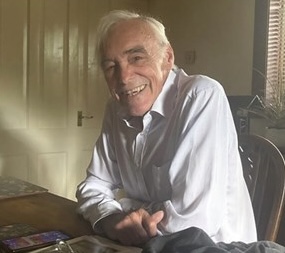
Sources
- What has the Preston Model achieved so far, Co-op News
- Reading between the lines of the Local Power Plan, Regen
- Local Power Plan, GB Energy and DESNZ, February 2026
- Community Wealth Building in Preston, CLES
- How we built community wealth in Preston, CLES and Preston City Council, 2019
- Opinion: The Preston Model is tainted by party politics and set to fail, Blog Preston
- City Council leader responds to criticism, Blog Preston
-
Obituary: Bill Shannon, key player in the reinvention of the Co-op Group
