
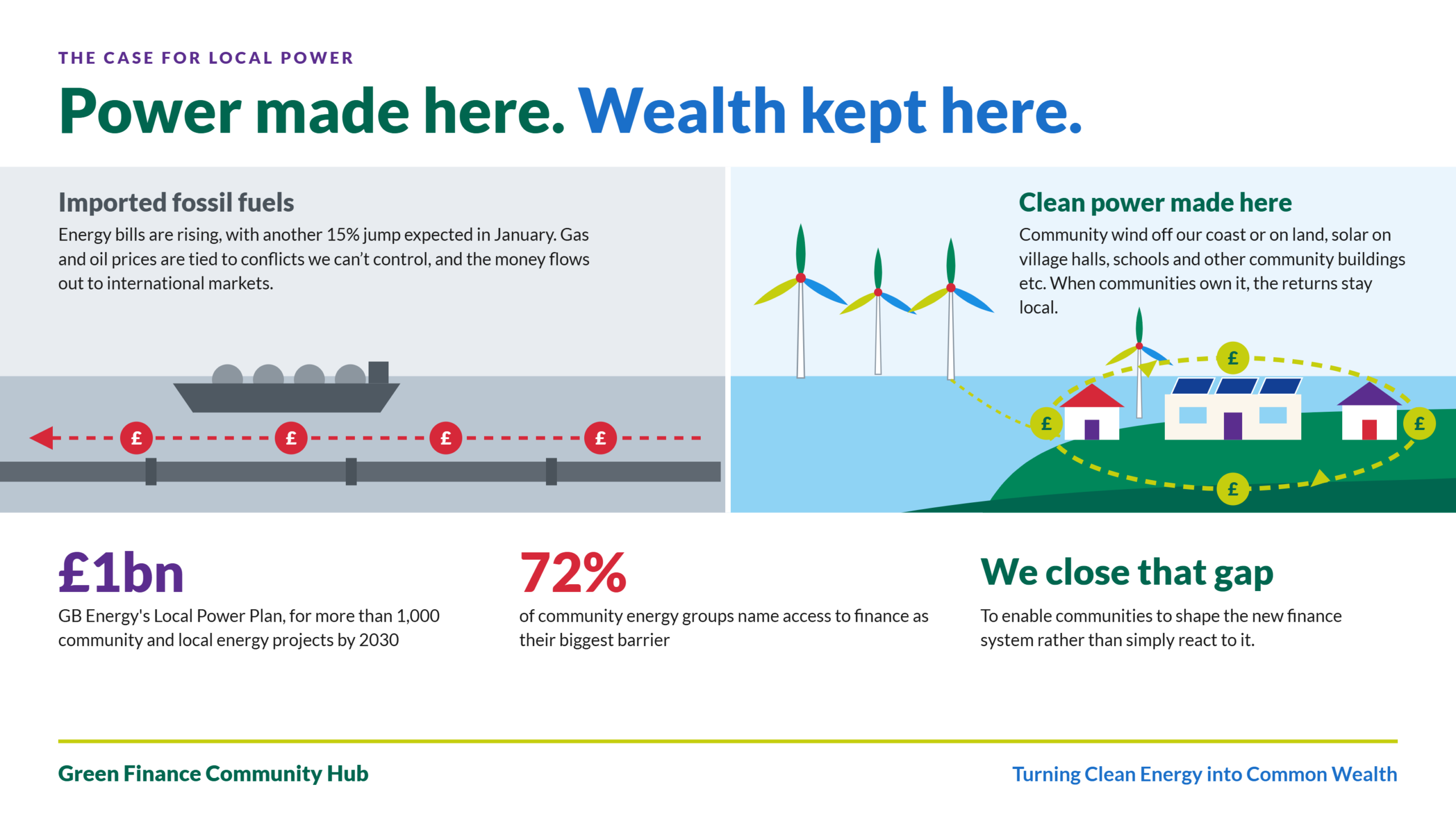
The energy crisis of 2022 showed what it costs to depend on imported fossil fuels. Household bills doubled, and the money flowed out of local economies to international markets. Four years on, we are exposed again. Energy bills are rising, with another increase of around 15% expected in January. As North Sea gas runs down, Britain relies more on imports, leaving us open to global markets and conflicts we can’t control.
Clean power generated locally, from wind off our coast or on land to solar on schools and village halls, helps protect people from those shocks. It also cuts the emissions driving climate change. When communities own it, the returns stay local, as places like Orkney and Bristol already show.
GB Energy’s Local Power Plan commits up to £1bn to more than 1,000 community and local energy projects by 2030. The money is arriving, but the finance products are still being designed and small projects still struggle to reach investors. In the government’s own call for evidence, 72% of community energy groups named access to finance as their biggest barrier. We exist to close that gap and to make sure communities shape the new finance system rather than simply react to it.
